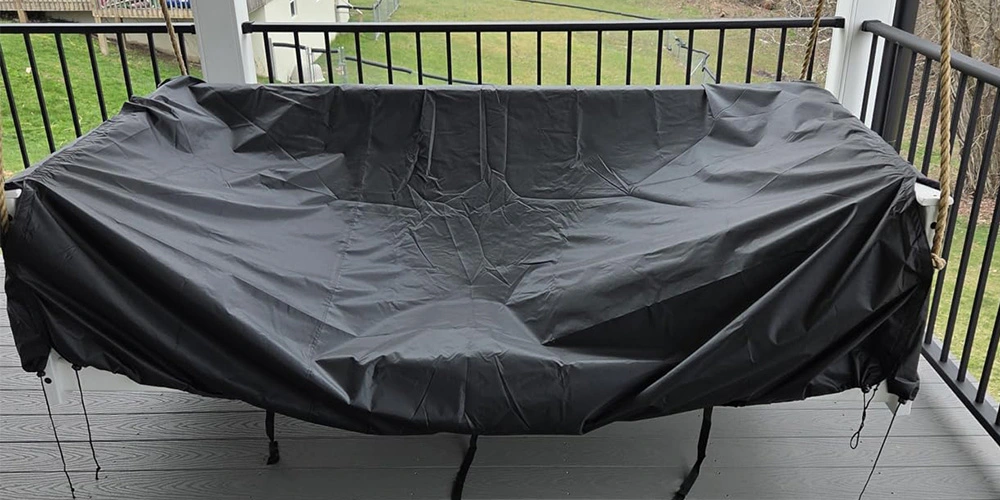
The demand for durable, weather-resistant grill covers keeps growing as more consumers invest in outdoor cooking and patio lifestyles. If you want to build a private label brand in this category, the fastest path is learning how to source reliably, control quality, and create clear product positioning with the right grill cover manufacturers. This guide walks you through every step — from product decisions and supplier evaluation to sampling, branding, and launch planning.
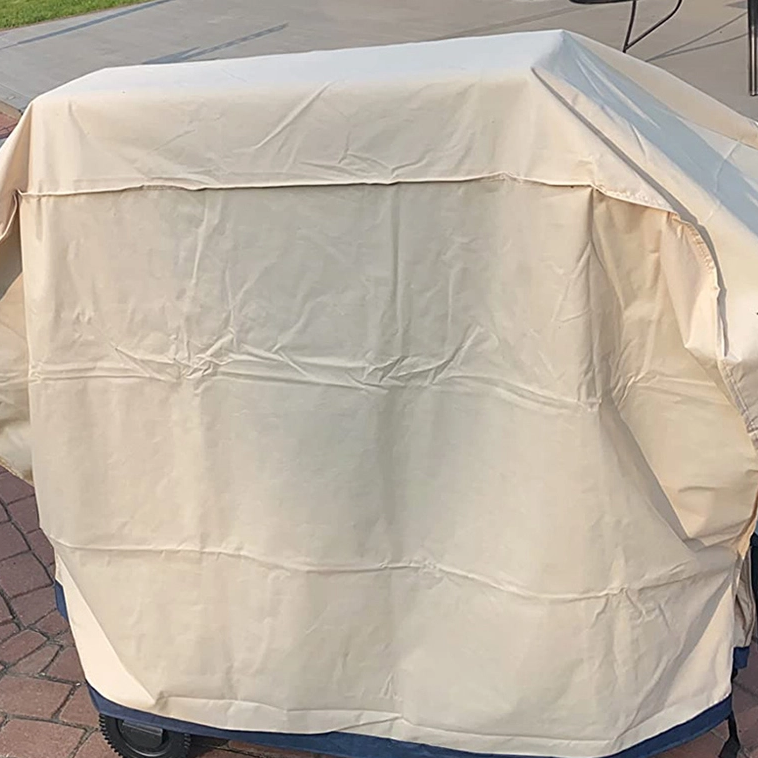
Define Your Product Positioning Before You Source
The biggest mistake new private label buyers make is contacting grill cover manufacturers before knowing what product they are actually trying to build. Factories can produce almost anything — your job is to tell them exactly what you need and why.
Choose Your Niche
| Positioning | Target Customer | Price Point | Key Differentiator |
|---|
| Premium heavy-duty | BBQ enthusiasts, serious outdoor cooks | Higher retail | Heavy fabric, full warranty, reinforced construction |
| Budget essentials | First-time buyers, seasonal use | Entry to mid | Lightweight, simple design, value for money |
| Custom-fit lines | Brand-conscious consumers, gift buyers | Mid to premium | Precise fit to specific grill models, clean aesthetics |
| B2B and hospitality | Hotels, restaurants, outdoor venues | Volume pricing | Durability, logo branding, consistent supply |
Define Your Brand Promise
Before asking for quotes, write one sentence that describes your product's core promise. Examples:
"Stays waterproof through two winters and protects color from UV fade"
"Fits 20 Weber and Napoleon models precisely — no bunching, no wind-off"
"The best-looking cover on Amazon under USD 40"
This promise determines which material specs matter, which features are worth the cost, and which are unnecessary for your customer.
Set a Target Retail Price
Work backwards from your retail target to establish a maximum factory cost. A common private label calculation for Amazon or DTC:
Target retail: USD 45
Amazon fees, shipping, and margin: approximately 60–65% of retail consumed
Maximum landed cost per unit: USD 15–18
If your specification costs more than that at the required MOQ, either the spec needs to change or the retail price needs to go up.
Key Materials and Feature Specs to Request from Grill Cover Manufacturers
Once positioning is defined, translate it into a technical specification that grill cover manufacturers can quote accurately and consistently.
Material Options
| Material | Performance Profile | Best Application |
|---|
| 600D polyester + PVC backing | Waterproof, heavy, structured | Premium and heavy-duty positioning |
| 600D polyester + PU coating | Lighter than PVC, good waterproofing | Mid-range with better weight and drape |
| Oxford fabric (300D–900D) | Breathable, lighter weight | Budget to mid; good for drier climates |
| Solution-dyed polyester | Superior UV and fade resistance | Premium outdoor branding; color-critical programs |
Key Performance Specifications
| Spec | What to Define | Why It Matters |
|---|
| Fabric denier and GSM | Confirm both — denier measures thread thickness, GSM measures fabric weight | Determines durability perception and actual strength |
| Seam construction | Double-stitched, taped seam, or welded seam | Taped seams are the highest waterproof standard |
| Waterproof rating | Hydrostatic head test result (minimum 1000 mm; 3000 mm+ for premium) | Defines performance in heavy rain |
| UV resistance | Hours to AATCC 186 or equivalent standard | Prevents color fading and fabric degradation in sun |
| Fastening system | Wind strap, drawcord hem, buckle, Velcro | Determines whether the cover stays on in wind |
| Air vent | Mesh vent to prevent condensation and wind lift | Reduces moisture trapping and improves stability |
| Handle | Padded or cord handle for removal | Reduces returns from usability frustration |
Packaging Requirements
Define packaging at the specification stage — not at the production stage:
Polybag type and dimensions
Branded storage bag or carry bag for premium positioning
Branded insert card with warranty and care instructions
Barcode or FNSKU label placement for marketplace fulfillment
Master carton dimensions and per-carton quantity for freight planning
How to Vet Grill Cover Manufacturers
Finding a factory that can quote your spec is straightforward. Finding one that delivers it consistently across reorders at the same quality level is the actual challenge.
Supplier Screening Checklist
| Evaluation Area | What to Verify | Red Flag |
|---|
| Export experience | US and EU export history; labeling and compliance understanding | No export experience for your target market |
| Production capacity | Can handle your volume at peak season without subcontracting | Vague capacity claims with no facility detail |
| QC process | Incoming material inspection, in-line checks, final AQL inspection | No documented QC process |
| Material traceability | Can trace each fabric batch to a supplier and test lot | No batch records; cannot identify material source |
| Lead time reliability | Examples of on-time delivery rates, not just quoted lead times | Quoted lead time changes significantly after deposit |
Documentation to Request Before Ordering
Fabric test reports: waterproof hydrostatic head, UV resistance, and colorfastness
Compliance statements: chemical safety and restricted substance confirmation (REACH or equivalent)
Warranty terms the factory supports vs. what you claim to end customers
Factory audit report or willingness to accept a third-party audit
Practical Supplier Comparison Approach
Shortlist three to five grill cover manufacturers. Send each the same completed specification sheet — same dimensions, same material requirements, same print and packaging brief. This creates a like-for-like quote comparison that reveals real price differences rather than differences driven by scope interpretation.
Grill Covers Sampling: Prototypes, Fit Testing, and Performance Testing
A sample that looks good on a hanger and a cover that performs in a Seattle winter are two different things. The sampling stage is where you discover the gap between specification and execution.
Sampling Steps
Provide the manufacturer with a size chart that includes the specific grill brands and models you want to fit — Weber, Napoleon, Char-Broil, Traeger each have distinct dimensions. Define whether you are pursuing universal sizing or custom fit.
Confirm tolerances before the prototype is made:
What to Test on Every Sample
| Test | Method | Pass Criteria |
|---|
| Water penetration | Simulate rain; check seams, vents, and hem | No leakage through seams or fabric after 30-minute test |
| Water pooling | Pour water onto top panel | Water runs off; no standing pool |
| UV and color fade | UV lamp test or outdoor placement | Color deviation within acceptable range |
| Strap and buckle strength | Pull test on fastening system | No separation or distortion at simulated wind load |
| Ease of use | Put on and remove five times across different grill models | No snagging, bunching, or excessive effort |
| Storage fold size | Fold cover into storage bag | Fits without forcing; bag closes cleanly |
Sample Approvals
After revision is complete, approve a pre-production sample (PPS) made from the exact materials and construction of the bulk run — not a prototype made from substitute materials. Retain one unit as the golden sample against which pre-shipment inspection is conducted.
Private Label Launch: Branding, MOQ, Logistics, and Sales Channels
With a validated sample and confirmed spec, the commercial and go-to-market decisions become the focus.
Brand Assets to Define
| Brand Element | Options | Recommendation |
|---|
| Logo placement | Embroidered patch, heat-transfer, woven label at hem | Woven label at hem plus heat-transfer on storage bag |
| Hangtag | Die-cut card with brand story, warranty, and compatibility list | Include warranty period and care instructions |
| Packaging | Plain polybag vs. branded carry bag with print | Branded carry bag adds perceived value for premium positioning |
| Insert card | Warranty registration, care guide, brand message | Simple single-page insert; minimal cost, real brand impact |
Commercial Terms to Confirm
| Term | What to Establish | Why It Matters |
|---|
| MOQ per SKU | Minimum units per size and color | Drives initial inventory investment |
| Deposit terms | Typically 30% deposit, 70% before shipment | Confirm payment method accepted |
| Production timeline | Weeks from deposit to ex-factory | Build backwards from your launch date |
| Reorder lead time | Weeks for a repeat order of same spec | Plan replenishment before stockout |
| Shipping method | Sea freight for bulk; air for urgent reorders | Sea freight is significantly cheaper; plan 4–6 weeks transit |
Go-to-Market Planning
Start with a focused SKU set — two or three best-selling sizes, one or two core colors (black and gray cover the majority of demand), and a clear size compatibility chart in the listing or packaging.
For Amazon launches, invest in product photography showing the cover in real outdoor conditions — rain, sun, wind — and close-up shots of construction features that justify the price point. Warranty messaging in the main listing title or bullet points consistently improves conversion in the grill cover category.
Expand into premium upgrades (heavier fabric, extended warranty, fitted lines) or set offers once initial sell-through is confirmed.
Conclusion
Launching a private label grill covers line comes down to three things done correctly: a focused product spec that matches your customer's real need, a quality process that delivers that spec consistently across every batch, and a supplier relationship you can scale as demand grows. Once materials and fit are validated through sampling, the path to packaging, logistics, and channel launch is straightforward.
FAQ
Q1: How do I choose between universal-fit and custom-fit grill covers for a private label launch?
Universal-fit is the lower-risk starting point — fewer SKUs, simpler inventory management, and faster sampling. It covers the majority of grill buyers who are not looking for a model-specific fit. Custom-fit commands a higher retail price and creates a stronger product story, but requires tighter sizing control and more SKU planning. Start universal and expand to custom fit once you understand your customer's expectations.
Q2: What should I ask grill cover manufacturers to demonstrate quality?
Request the fabric specification sheet (denier, GSM, and coating type), seam construction detail (stitched, double-stitched, or taped), waterproof test report with hydrostatic head result, UV resistance test report, and the factory's AQL inspection level and process. A manufacturer who cannot provide test reports or a documented QC process is a significant supply risk.
Q3: What is a typical MOQ for private label grill covers?
MOQ varies by factory, material complexity, and number of sizes and colors. Fewer colors, fewer sizes, and simpler packaging reduce MOQ. Share your volume target early in supplier conversations to confirm whether the program is viable before investing in sampling.
Q4: How long does the sampling and production process typically take?
Allow two to three weeks for initial prototype development, one to two weeks for revision and pre-production sample approval, and six to ten weeks for bulk production. Add four to six weeks for sea freight to US or EU ports. Plan your launch timeline from deposit date backward to confirm whether your target in-stock date is achievable.
Q5: Which private label customizations deliver the best return early on?
Branded packaging with a warranty message, reinforced taped seams as a visible quality upgrade, a secure wind strap or buckle system, and a padded handle for easy removal are the highest-impact early investments. These features address the most common complaints in the grill cover category and support a clear value message in product listings without significantly complicating production.

 English
  Deutsch
  中文
中文