The service write-up said "jack not working." The technician found corrosion on the switch contacts and grime packed into the motor housing. The unit had been on the lot for eleven weeks. No cover. Full sun, two rainstorms, and a dusty gravel lot.
The repair took two hours. The part was under warranty. The customer's delivery was delayed by a day. And the same failure mode had appeared on four other units that quarter.
In 2026, RV dealerships are under pressure to reduce avoidable warranty tickets while protecting CSI scores and service-bay capacity. Many "jack not working" complaints trace back to preventable environmental exposure—UV degradation, water intrusion, road grime, and corrosion around the head assembly. A well-specified electric tongue jack cover is a low-cost, high-impact intervention that interrupts this failure pathway before it reaches the service bay.
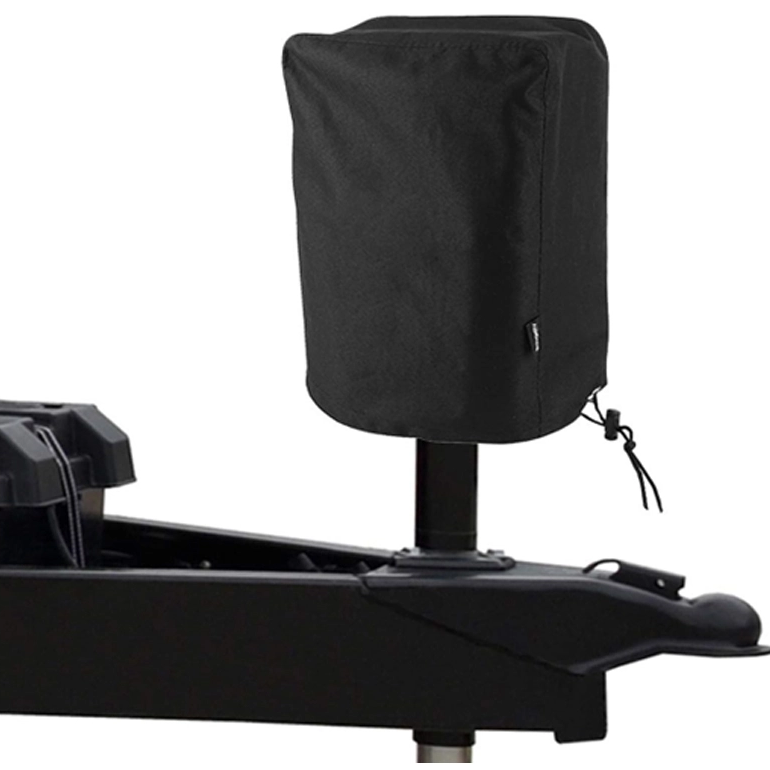
Why an Electric Tongue Jack Cover Reduces Failures
The Environmental Failure Pathway
An electric tongue jack is a precision electromechanical assembly: motor, gearbox, switch contacts, wiring connections, and a housing that is mounted at the front of the trailer—one of the most exposed positions on the unit. Without protection, it faces:
UV radiation: continuous sun exposure degrades plastic housings, switch covers, and wiring insulation; surface cracking opens pathways for moisture ingress
Rain and standing water: water that enters around switch openings or seam gaps reaches electrical contacts and accelerates corrosion
Road grime and dust: fine particles accumulate in moving interfaces and around wiring connections, increasing resistance and causing intermittent operation
Salt mist and winter road chemicals: coastal storage and winter towing expose the jack to accelerated corrosion that can progress from surface oxidation to functional failure within a single season
How an RV Electric Jack Cover Interrupts This Pathway
An rv electric jack cover addresses each exposure vector:
Barrier protection: physical barrier between the jack head assembly and rain, snow, dust, and road film
UV defense: UV-stable outer layer reduces photodegradation of both the cover and the jack housing beneath it
Debris prevention: limits mud and sand buildup around moving interfaces and wiring areas
Moisture management: properly designed covers shed water rather than trapping it—a critical distinction from improvised solutions
The Warranty Impact Logic
The connection between environmental protection and warranty claim reduction is direct:
Exposure → degradation → intermittent operation → customer complaint → service visit → warranty ticket
An electric tongue jack cover interrupts this chain at the first link. Fewer exposure events mean fewer degradation events, fewer intermittent failures, and fewer service visits that consume technician time and generate warranty paperwork.
RV Electric Jack Cover Specs That Matter
Specifying an rv electric jack cover without confirming material, fit, and construction quality produces the most common outcome in this category: a cover that looks adequate in a product photo but fails in service—blowing off in wind, trapping water, or wearing through at contact points within a season.
Material and Coating
| Specification | What to Confirm |
|---|
| Outer fabric | UV-stable material rated for continuous outdoor exposure |
| Water resistance | Water-repellent or waterproof treatment; confirm performance after repeated wetting |
| Inner surface | Smooth lining to prevent abrasion on jack housing finish |
| Reinforced panels | Additional material thickness at corners and high-contact zones |
Fit and Geometry
Sized for common electric tongue jack head profiles—confirm compatibility with the specific jack brands in your inventory
Clearance for switches and indicator lights: the cover must provide full environmental protection without blocking access to controls that customers use during setup
Depth coverage: the cover should extend below the head assembly to protect the upper portion of the column where wiring exits
Seams and Closures
Seam and closure quality determines whether the cover stays in place and keeps water out:
Stitching: reinforced stitching at stress points; double-stitched seams at corners and closure attachment points
Sealed seams: where applicable, taped or sealed seams prevent water tracking through stitch holes
Closure type: elastic, drawstring, or strap—each has different performance characteristics in wind and different ease-of-use implications for customers
Wind retention: the closure must hold the cover in place at highway speeds if the trailer is towed with the cover on, and in wind conditions typical of outdoor lot storage
Wear Points
Reinforced corners where the cover contacts the jack housing edges
Abrasion-resistant material at the bottom edge where the cover contacts the column
Closure hardware that does not corrode or seize in outdoor storage conditions
Branding Option
For dealerships that want to turn protection into a value-added delivery accessory, an electric tongue jack cover with dealership logo or private-label marking converts a functional item into a branded touchpoint that customers see every time they set up camp.
Environmental Failure Pathway With and Without Protection
As illustrated below, installing an electric tongue jack cover helps shield your RV jack from three key damaging factors — UV exposure, moisture, and debris buildup — ultimately reducing jack-related failures and warranty claims, saving you time and money on repairs.
Outdoor exposure (UV • rain • dust • salt)
                ↓
        Jack head assembly
    (switches • wiring • motor housing)
           ↙              ↘
   WITHOUT cover        WITH electric tongue jack cover
        ↓                        ↓
UV cracking +              Barrier + UV shielding
grime buildup              reduced debris accumulation
moisture ingress                   ↓
        ↓                  More stable operation
Intermittent operation     less corrosion exposure
corrosion / shorts                 ↓
        ↓                  Fewer service visits
Service visit              lower warranty claims
warranty ticket
Best Use Scenarios for an Electric Tongue Jack Cover
Dealer Lot Storage
Units sitting on outdoor lots for weeks or months face continuous UV and weather exposure before they are ever sold. This is the highest-risk period for environmental damage because the jack is fully exposed with no owner maintenance. An electric tongue jack cover applied at receiving or PDI protects the jack through the entire lot storage period.
Priority specification: UV stability, water shedding, wind retention for open lot conditions.
Customer Ownership: Seasonal and Regional Exposure
Customers in coastal regions face salt mist corrosion. Customers in northern climates face winter road salt and freeze-thaw cycling. Customers in high-UV regions face accelerated plastic degradation. An rv electric jack cover included at delivery—or offered as a service upsell—protects the jack through the ownership period and reduces the likelihood of a warranty claim in year one or two.
Priority specification: material appropriate for the regional climate; closure that customers can operate easily without tools.
Rental Fleets
Rental units face high turnover, inconsistent cleaning habits, and higher cumulative exposure than owner-operated trailers. Grime accumulation and "quick failure" complaints are more common in rental fleets because units are not maintained between rentals. An electric tongue jack cover as a fleet standard reduces the maintenance burden and extends the service interval between jack-related service events.
Priority specification: durability for repeated installation and removal; easy-clean outer surface; secure closure that survives high-turnover handling.
Pre-Delivery Inspection (PDI) Add-On
Adding an rv electric jack cover at PDI is the highest-leverage application for dealerships. It protects the jack from delivery-day forward, sets a quality expectation with the customer, and creates a branded touchpoint if the cover carries the dealership logo. The cost per unit is a fraction of a single warranty service visit.
Priority specification: professional appearance for customer-facing delivery; branding option if available; easy installation for PDI technicians.
Selecting the Right Electric Tongue Jack Cover: Installation and Fit Checklist
Installation: Simple and Repeatable
Installing an electric tongue jack cover requires no tools and no modification to the jack or trailer:
Power off the jack and confirm the head assembly is dry and clean before covering
Slide the cover over the jack head, ensuring full coverage of the switch area and wiring exits
Tighten the closure (elastic, drawstring, or strap) to secure the cover against wind
Confirm the cover does not contact sharp edges on the trailer frame that could abrade through the material
Check that the closure is not so tight that it traps moisture against the jack housing
Selection Checklist for Dealerships
Before ordering, confirm:
RV Electric Jack Cover Maintenance, Replacement Cycles, and TCO
Maintenance: Low Effort, High Return
An rv electric jack cover requires minimal maintenance to perform its protective function:
Periodic wipe-down to remove surface grime and prevent abrasive particle buildup
Allow to dry completely before long-term storage to prevent mold and material degradation
Check closure tension and seam integrity at each seasonal inspection—a loose closure that allows wind lift defeats the cover's protective function
Replacement Planning
Treat the electric tongue jack cover as a consumable protective component with a defined service life. Replace when:
Surface cracking or UV degradation compromises the material's water resistance
Seam failure creates gaps that allow moisture ingress
Closure wear prevents secure fastening
A cover that is replaced on a defined cycle—rather than run to failure—maintains consistent protection and avoids the situation where a degraded cover provides false confidence while offering reduced protection.
TCO Model for Dealerships
| Cost Factor | Without Cover | With Cover |
|---|
| Jack-related warranty claims | Higher frequency | Reduced frequency |
| Service labor per claim | 1.5–2.5 hours typical | Fewer events |
| Parts cost per claim | Variable; corrosion damage can be extensive | Reduced |
| Customer satisfaction impact | Negative: delivery delay, repeat visits | Positive: protected delivery experience |
| Cover cost per unit | — | Low; fraction of one service visit |
Trackable KPIs for dealerships running a pilot:
Jack-related warranty claims per 100 units delivered (before and after cover program)
Repeat visit rate for jack-related complaints
"Exposure/corrosion" cause codes as a percentage of total jack service events
CSI comment frequency related to jack performance
Conclusion
For RV dealerships, reducing warranty volume is often about eliminating preventable exposure-related failures before they reach the service bay. An electric tongue jack cover—what your customers may search for as an rv electric jack cover—is a low-cost, high-impact add-on at PDI or delivery that protects the jack head assembly from the UV, moisture, and debris exposure that drives the majority of premature failures.
The math is straightforward: one avoided warranty service visit pays for dozens of covers. The specification work that makes this reliable is equally straightforward: confirm fit, confirm material quality for your regional climate, and confirm closure security for your lot conditions.
Ready to Protect Your Inventory? Get a Recommended Configuration and Quote
Visit the product page and submit your details to receive a recommended specification and quotation:
To receive an accurate recommendation, submit the following:
Work conditions: UV intensity, rain/snow exposure, coastal salt, dusty lot, wind conditions
Quantity: per month or quarter; per-store rollout plan
Size and spec: jack brand/model or head dimensions; closure style preference; material preference
Target metrics: warranty claim reduction goal, expected cover service life
Current problems: UV cracking on jack housing, water intrusion, corrosion, wind blow-off, fit issues with current covers
FAQ
Q1: What is an electric tongue jack cover?
An electric tongue jack cover is a purpose-built protective cover designed to fit over an RV trailer's electric tongue jack head assembly, shielding it from UV radiation, rain, snow, dust, road grime, and salt mist during storage and use. It is constructed from weather-resistant materials with UV-stable outer layers, reinforced wear points, and secure closures to prevent wind displacement. It installs externally with no modification to the jack or trailer and is designed to be removed and reinstalled easily by the owner during normal trailer use.
Q2: How does a purpose-built cover compare to no cover, universal tarps, or improvised bags?
A purpose-built rv electric jack cover is sized specifically for the jack head profile, which means it covers the critical areas—switch contacts, wiring exits, motor housing—without leaving gaps. It secures with a designed closure that resists wind displacement, whereas tarps and improvised bags typically rely on weight or loose ties that fail in wind. Purpose-built covers use materials selected for UV stability and water resistance, whereas improvised solutions often trap moisture against the jack housing—accelerating the corrosion they are intended to prevent. The abrasion resistance at contact points is also designed in, whereas improvised solutions typically wear through quickly at the edges.
Q3: What ROI can a dealership expect from adding covers at PDI?
ROI for an electric tongue jack cover program at a dealership is driven by avoided warranty service visits. A single jack-related warranty service event typically involves 1.5–2.5 hours of technician time plus parts—a cost that exceeds the price of many covers by a factor of ten or more. The most reliable way to quantify ROI is a pilot program: track jack-related warranty claim frequency and repeat-visit rates for units delivered with covers versus units delivered without, over a 90–180 day period. Dealerships in high-UV or coastal markets typically see the fastest payback due to the accelerated failure rates in those environments.
Q4: Do we need to modify the RV or jack to use an electric tongue jack cover?
No modifications are required. An rv electric jack cover installs externally over the jack head assembly with no drilling, wiring changes, or permanent attachment. The only installation requirements are confirming that the cover fits the specific jack head dimensions, that the closure secures properly for the wind conditions at the storage location, and that the cover does not contact sharp trailer frame edges that could abrade through the material over time.
Q5: What information should we provide for correct selection and quoting?
To receive an accurate recommendation and quotation for an electric tongue jack cover, provide: jack brand and model or head assembly dimensions (height, width, depth), climate and exposure conditions (UV intensity, rain/snow, coastal salt, dusty lot, wind), preferred closure type (elastic/drawstring/strap), whether access cutouts for switches or lights are required, packaging needs (individual or bulk), monthly or quarterly volume, whether dealership branding is desired, and the primary failure modes you are currently experiencing (UV cracking, water intrusion, corrosion, wind blow-off, or fit issues with existing covers).

 English
  Deutsch
  中文
中文