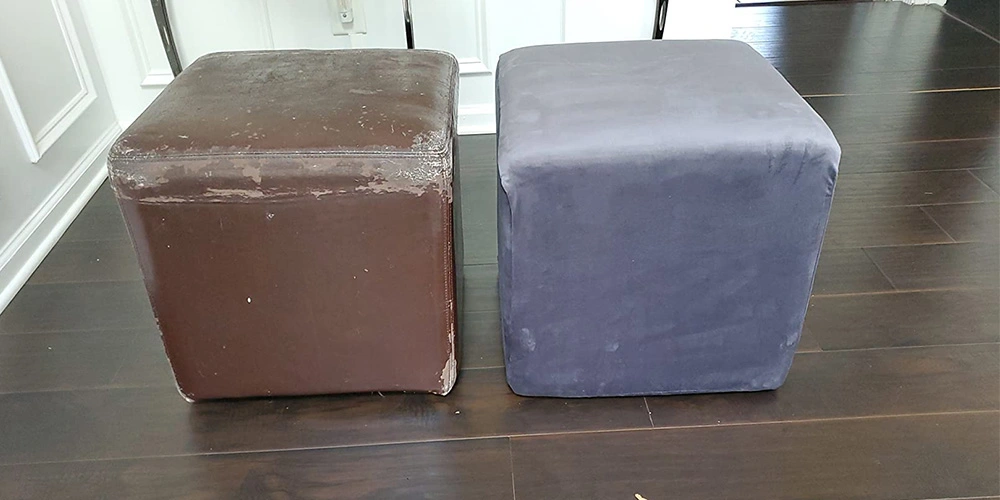
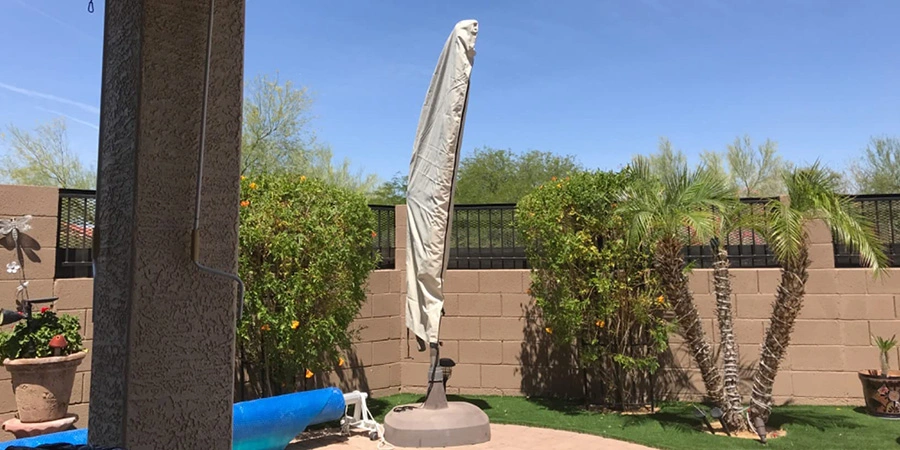
Adirondack chairs have sloped backs, wide arms, and low seats, so a simple width-by-height rectangle does not define the cover. Fit problems often come from measuring one chair, ignoring production variation, or failing to define where the cover should end above the ground.
An OEM measurement pack should combine a dimensioned drawing, photographs, chair sample or CAD data, fabric choice, and desired fit. The cover factory can then develop a pattern and graded sizes.
Measure the Chair in Its Use Position
Record maximum arm-to-arm width, including curved edges.
Measure total depth from the front extremity to the back projection.
Measure height from the floor to the top of the back in the normal position.
Record seat, arm, and back widths at several heights.
Locate protrusions, gaps, and contact points that can abrade fabric.
Define the desired ground clearance and whether legs should be exposed.
For custom Adirondack chair covers, identify the chair model and production tolerance. A cover based on a single unusually small sample may not fit the rest of a retail program.
Choose Ease Without Creating Wind Pockets
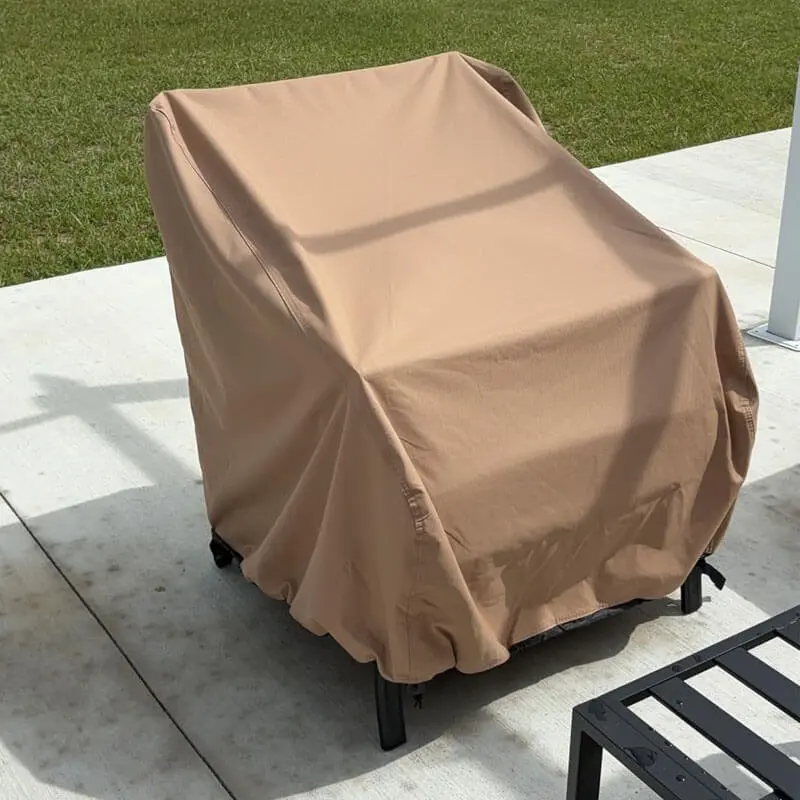
Pattern ease allows installation, removal, and dimensional variation. Too little ease strains seams and coating; too much fabric can collect water, flap in wind, or look poorly fitted. Ease should be distributed around arms and back rather than added as one global percentage.
Build a prototype at the smallest and largest expected chair sizes. Test installation by the intended user and record whether the cover snags on arm corners or requires excessive force.
Design Water and Air Management
| Feature | Design purpose | Validation |
|---|
| Sloped top panels | Reduce standing water | Spray/rain and drainage observation |
| Covered seams | Limit water entry | Hydrostatic or spray method as specified |
| Vents | Reduce condensation and wind pressure | Wind/rain orientation trial |
| Ground clearance | Avoid wicking and dirt | Fit on real chair and surface |
| Handles | Aid removal | Pull and cycle test |
Waterproof fabric does not guarantee a waterproof finished cover. Needle holes, seam construction, vents, and closures define the assembly result. State the test method and acceptance criteria.
Secure the Cover for Outdoor Use
Elastic hems, drawcords, buckled straps, and leg loops serve different furniture and wind conditions. Locate restraints where they can be reached and cannot rub a finished surface. Plastic hardware should be checked for cold impact and UV exposure when required.
A wind test should use the chair, cover, and restraint layout together. Avoid marketing a universal wind rating unless the complete setup and test conditions support it.
OEM Approval Package
Chair CAD/drawing, tolerance range, and approved cover pattern
Fabric, coating, color, thread, seam, and hardware specifications
Logo artwork, label position, and retail packaging
Fit, water, UV/color, tensile/seam, and hardware test scope
AQL, measurement points, golden sample, and change-control rules
Carton dimensions, assortment, barcode, and shipment plan
Frequently Asked Questions
Should the cover touch the ground?
Usually, a controlled clearance helps drainage and reduces dirt/wicking, but the target depends on the chair and design.
How much extra size should be added?
Ease is pattern-specific. Prototype the expected chair tolerance rather than adding one fixed amount to every dimension.
Does 600D fabric mean the cover is waterproof?
No. Denier describes yarn mass. Coating, seams, construction, and test performance determine water resistance.
What is needed for an OEM quotation?
Provide dimensions/CAD, quantity, fabric and test target, logo, packaging, destination market, and delivery schedule.
Approve Fit on Production-Intent Chairs
OEMCOVER can develop a sample from chair drawings or a physical reference. Approve the pattern on the size extremes and freeze all material, trim, and packaging details before bulk production.

 English
  Deutsch
  中文
中文